How I Use AI to Stop Paying the Foreigner Tax
- Jun 17
- 3 min read
There are two expat grocery stores across the street from me. The food choices and quality are good—sometimes better than the Whole Foods I left behind. And the labels are in a language I can read.

Avoid the Neighborhood Expat Grocery Markup
The problem: expat stores are the most expensive way to feed myself in my own neighborhood.
That's the foreigner tax. Not a scam. Just the premium you pay for the version of a place that's been made easy for outsiders: the imported brand, the shelf stocked with what you already recognize.
Most travelers pay the foreigner tax the entire time they're abroad, never realizing cheaper options are tucked away just blocks from the expat stores.
I used to be like most travelers. What changed wasn't willpower.
I started asking AI a different question—not "translate this," which only ever gets you the English name of a thing you still don't understand, but: What do people who live here actually reach for, and where do they get it?
Water was first.
How to Find Safe, Cheap Drinking Water in Southeast Asia
I used to lug five-gallon jugs of big-brand bottled water home from the expat store, assuming that was just the price of staying hydrated. It wasn't.
I asked AI where locals get their water, and had it decode the labels I couldn't read—where the water comes from, how it's processed, why one bottle is safer than another.
Now, a vendor delivers toddler-sized bottles of a local brand I actually trust—for way less. Overnight, life abroad got three times easier.
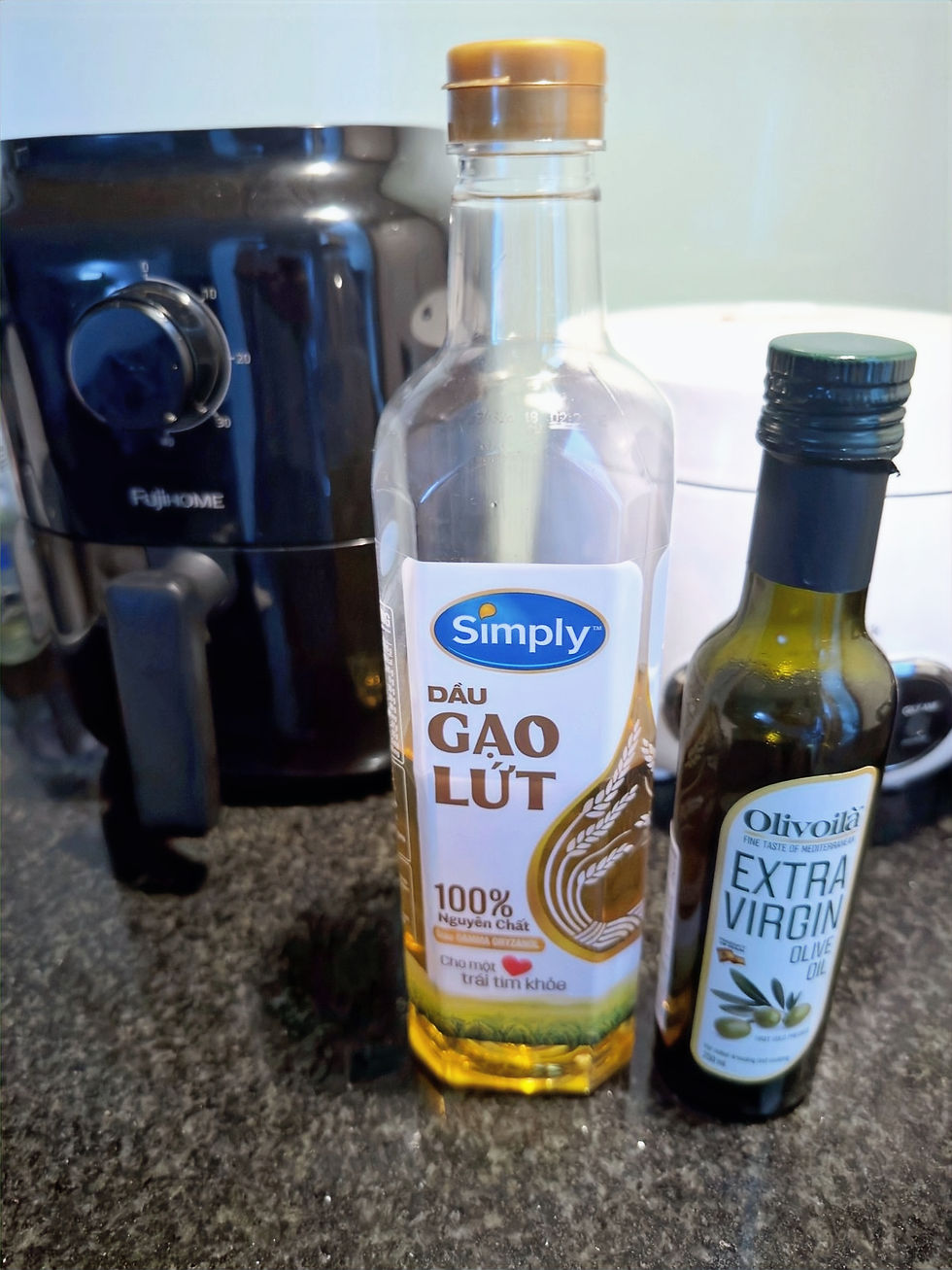
Upgrade Your Cooking: The Local Olive Oil Alternative
Take my old staple, olive oil. Imported extra virgin costs a fortune here, and the store across the street happily overcharges me.
So, I asked AI what a local kitchen leans on instead. It pointed me to rice bran oil—dầu gạo lứt. It’s a bigger bottle, better for how I cook, and costs less than half the price of the import.
How to Buy a Small Air Fryer on Shopee
I did what a foreigner does first: I went to the mall.
Every air fryer I saw was overpriced, massive, and bloated with features I’d never use. It was gear built for foreigners who didn’t know where else to look. I just wanted small and simple.
The secret? Locals don't buy appliances at the mall. They use Shopee.
But there was a catch: Shopee is built for people who already know what to type, and I didn't have the words.
My ideal air fryer was on Shopee the entire time, buried under a language I was still learning. I broke the deadlock by asking AI what to type. It navigated the marketplace for me, plucked out the exact listing, and delivered the small, simple option for way less than the mall wanted.
That fryer earns its keep, because I cook every meal.
Cooking Hearty Vegetarian Meals in a Tiny Kitchen

No oven. One induction plate. And I eat better than I did with a full kitchen back home.
I'm vegetarian, which abroad usually means overpaying at the one health-food place or under-eating protein. Neither is an option for an active woman over 60.
So I tell AI what's in my kitchen and ask for a complete local meal. It makes sure I'm getting enough protein from my pantry or the local wet market—not from expensive imports at the expat store.
The meals are food I actually want to eat—soba noodles tossed in soy sauce, chili, fresh lime, honey, and peanut butter. Or chickpeas with baby bok choy, and tofu that finally crisps up in that Shopee air fryer.
Fact-Check AI Shopping Advice with Local Vendors

AI doesn't always get it right. I take its ideas down to the open-air market and show a picture or the local name to the 'aunties' behind the counters. They’ll either sell it to me, wave me toward a vendor who has it, or shrug if the AI got it wrong.
I don't use AI to travel faster. I use it to stop overpaying to be a foreigner, one daily necessity at a time. The financial savings are real, but they aren't the primary goal.
Buying where the locals buy is how you learn the language and build connections. It transforms you from a temporary visitor into someone who belongs—the one thing no expat store can put on a shelf. Want more ways to live well abroad without overpaying? See how I eat well on a budget.


Comments